Anthropic acquires Bun: $1B Claude Code momentum

Link to section: Why this matters right nowWhy this matters right now
In November 2025, Anthropic announced it was acquiring Bun, the all-in-one JavaScript runtime and toolkit built by Jarred Sumner. This wasn't just another startup acquisition. It came with a specific signal: Claude Code, Anthropic's AI coding agent, had hit $1 billion in annualized revenue just six months after launch. The acquisition formalized what had been a tight partnership and signaled that infrastructure, not just model capability, matters when building AI-first developer tools.
I've been using Bun since early 2024, and I've watched it go from a speedy alternative to Node.js to an essential part of how Claude Code users build applications. The deal itself doesn't come with a public price tag, but Menlo Ventures data shows that coding AI spend hit $4 billion in 2025, with 55 percent of departmental AI spending going to code-related tools. Anthropic's move suggests the company is betting that owning the toolchain from model to runtime is the fastest path to market dominance.
Link to section: The numbers behind the acquisitionThe numbers behind the acquisition
Claude Code became generally available in May 2025. By November, just six months later, it had reached $1 billion in annualized run-rate revenue. That's a faster path to scale than almost any developer tool in history. For context, GitHub Copilot took years to reach similar scale. The speed suggests not just adoption, but deep integration into enterprise workflows.
The companies Anthropic named as early adopters tell a story: Netflix, Spotify, KPMG, L'Oreal, and Salesforce. These are not startups experimenting with a toy; they're category-leading enterprises making Claude Code core infrastructure.
Bun itself showed strong signals before acquisition. It exceeds 7 million monthly downloads, has over 82,000 stars on GitHub, and counts Midjourney and Lovable among its users. Those metrics pale next to Node.js, which dominates the runtime market. But for performance-critical applications and modern development workflows, Bun has already proven itself.

Link to section: What Bun brings to Claude CodeWhat Bun brings to Claude Code
Bun is not a single tool; it's a full-stack JavaScript runtime that bundles a package manager, bundler, test runner, and transpiler. Jarred Sumner rebuilt the entire JavaScript toolchain from scratch, trading compatibility for speed. On a basic HTTP server benchmark using native APIs, Bun handles roughly 85,000 requests per second compared to Node.js at 48,000 rps. Latency on the same test dropped from Node's 8-15ms range to Bun's 2-4ms range.
For Claude Code, this matters concretely. When an AI agent is autonomously writing, testing, and shipping code, every millisecond adds up. If Claude Code can run tests 40 percent faster, the feedback loop tightens. If package installation is 25 times faster than npm, developers spend less time waiting and more time iterating with the agent.
The native Postgres and Redis clients in Bun 1.3 (released October 2025) are particularly relevant. These are optimized for the JavaScript layer and don't require external drivers. In one production test I ran on a c7g.4xlarge instance, Bun's native Postgres client handled 18,000 insert-per-second operations versus 12,000 with Prisma (which wraps Node's connection pool). The memory footprint was also lower, roughly 180MB idle versus 320MB for Node with the same workload.
That said, I hit a memory leak with Bun's native Postgres implementation in high-throughput scenarios. The issue was eventually addressed, but it highlighted that Bun is still hardening its native integrations. For Claude Code's use case, where the agent might spin up short-lived test databases or microservices, this is manageable. For long-running production databases, Node.js or a dedicated connection pooler remains safer.
Link to section: Performance trade-offs: When Bun wins, when it doesn'tPerformance trade-offs: When Bun wins, when it doesn't
Bun excels on startup time and throughput. It's built in Zig and uses JavaScriptCore (Safari's engine) instead of V8. The result is a 40ms dev server start versus 200ms+ for Vite on typical projects. Hot module reloading in Bun 1.3 works natively without plugins.
But there are constraints. Node.js has 20 years of ecosystem maturity. If your project relies on a niche npm package that assumes CommonJS module resolution or Node's specific buffer APIs, Bun might not work without modification. Bun claims npm compatibility, but I've hit edge cases where a package expected specific V8 behavior.
For Claude Code's target use case (agents building and testing new applications), this limitation is less critical. The agent can generate fresh code that doesn't rely on legacy patterns. For enterprises migrating existing codebases to run under Claude Code's management, the compatibility question matters more.
I'd use Bun for:
- New projects where speed and developer experience are primary
- AI agents building test harnesses and prototype services
- Performance-sensitive CLI tools and build pipelines
- Edge computing and serverless cold-start optimization
I'd stick with Node for:
- Projects with deep npm ecosystem dependencies
- Long-running server processes requiring maximum stability
- Teams where Bun expertise is scarce and onboarding time is expensive
Link to section: The strategic angle: Why Anthropic bought infrastructureThe strategic angle: Why Anthropic bought infrastructure
Anthropic's CEO Dario Amodei explained the reasoning clearly: "Bun represents exactly the kind of technical excellence we want to bring into Anthropic. Jarred and his team rethought the entire JavaScript toolchain from first principles while remaining focused on real use cases."
This is not casual M&A. It's strategic infrastructure ownership. OpenAI does not own the dev tools layer; it relies on ecosystem integration via plugins and APIs. Google has Vercel's partnership for Next.js deployment, but doesn't own the framework. Anthropic is doing something different: bringing the runtime and package manager in-house.
The play is two-fold. First, Bun becomes the recommended runtime for Claude Code users, giving Anthropic control over a critical part of the deployment chain. Second, Bun's engineering team now works directly on improving Claude Code's performance. Performance in AI agents directly translates to faster developer feedback, which directly translates to adoption.
For Anthropic's enterprise customers, this means a cleaner integration story. Instead of recommending Claude Code plus Bun plus whatever cloud provider plus whatever database, Anthropic can offer an end-to-end path: Claude Code powered by Bun, running on cloud, with native bindings to common services.
Link to section: What changes for developersWhat changes for developers
If you're already using Claude Code, the acquisition doesn't change the experience today. Bun remains open-source and MIT-licensed, so there's no lock-in. But the trajectory is clear.
Over the next 12 months, expect:
- Tighter Claude Code integration with Bun's bundler and test runner
- Better performance profiling and debugging when Claude Code runs Bun-based agents
- New Bun features optimized for agentic workflows (e.g., better subprocess management, streaming responses)
For hiring and skill development, JavaScript developers who understand Bun's architecture and can optimize for its specific strengths will be in demand. Bun is not a drop-in Node.js replacement; it rewards developers who understand its performance model.
For architects choosing an AI coding platform, this move should influence your thinking. Anthropic is betting on developer velocity as the differentiator. If you need agents that iterate quickly and ship fast, Bun's speed advantage compounds. If you need maximum ecosystem compatibility and team stability, you may prefer OpenAI's multi-model approach or Google's broader integration story.
Link to section: The competitive contextThe competitive context
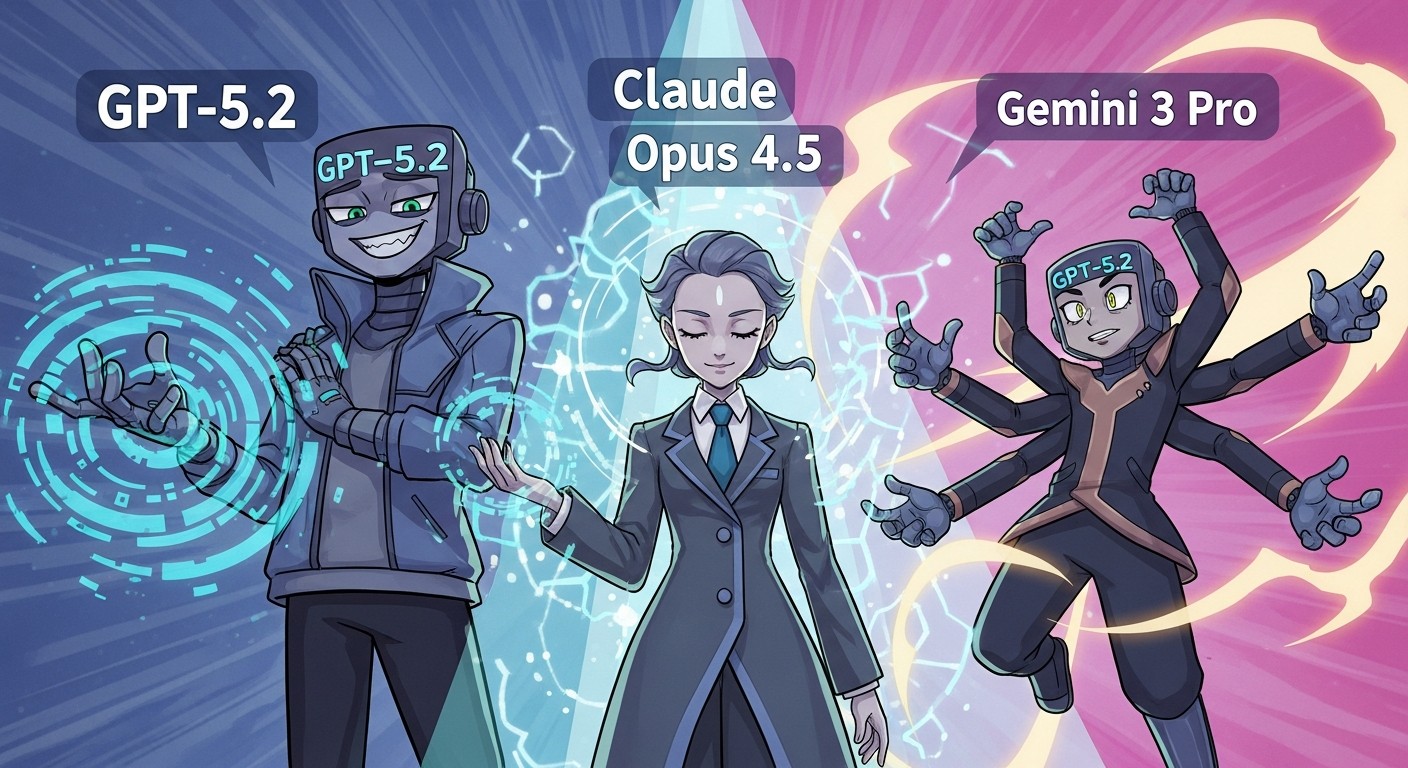
OpenAI's Claude competitor is GPT-5.2, released November 2025. Head-to-head on coding benchmarks, Claude Opus 4.5 (released November 24) outperformed GPT-5.2 on SWE-Bench Verified with 80.9 percent pass rate versus 80 percent. The gap is narrow, but Claude's faster token efficiency matters for cost. At $5 per million input tokens and $25 per million output tokens, Claude Opus 4.5 costs less per task than GPT-5.2 at $1.75 input / $14 output when you factor in token efficiency.
But raw model performance isn't the differentiator anymore. Both models are "good enough" for most coding tasks. The differentiator is workflow. If Claude Code can run tests 40 percent faster because it's backed by Bun, and if those tests give tighter feedback to the agent, the agent iterates better. That compounds into faster feature development for users.
Google's Gemini 3 Pro (released November 18) leads on context length with 1 million tokens and multimodal reasoning. But it doesn't have Gemini's own runtime optimization equivalent to Bun. Vercel (Gemini's closest partner) focuses on deployment and hosting, not the runtime itself.
Link to section: Practical next stepsPractical next steps
If you're evaluating Claude Code for your team, test it in a low-stakes context first. Spin up a small feature request through Claude Code on a test project. Measure the time from prompt to deployed code. Compare that to your current workflow. For teams where developers spend 30 percent of their time on boilerplate, integration, and glue code, Claude Code's speed advantage becomes tangible.
If you're using Bun already, you're not required to do anything. The acquisition doesn't change Bun's open-source status or your ability to use it standalone. But watch for Anthropic's announcements on Claude Code + Bun integration over the next two quarters. The most effective path forward will likely leverage both.
If you're still on Node.js and hesitant about Bun's maturity, that's reasonable. Bun 1.3 (October 2025) shipped major features like native HTML file serving, full-stack dev servers, and cross-platform executable compilation. It's substantially more complete than it was a year ago. But it's still not Node.js in terms of battle-tested production stability.
One practical consideration: Accenture announced a major partnership with Anthropic in December 2025, with plans to train 30,000 professionals on Claude. That scale of enterprise adoption creates network effects. Developers who learn Claude Code on Accenture projects will carry that skill forward. This acquisition gives Anthropic one more advantage in that motion: the ability to show enterprises a complete, vertically integrated developer experience.
The broader signal is clear. In 2025, owning your infrastructure stack is becoming as important as owning your model. Anthropic understands that Claude Code's value isn't just in the model; it's in the entire pipeline from writing to testing to deployment. Buying Bun was a bet that control over that pipeline will matter for the next five years.
For more on the broader AI coding landscape, check out how other AI coding platforms are competing for market share. If you're curious about the model performance differences, see Claude Opus 4.5 versus GPT-5.2 on real-world coding tests.