
Claude Opus 4.6 vs GPT-5.2: Agentic Coding Tests
Anthropic released Claude Opus 4.6 on February 5, 2026, just hours before OpenAI rolled out GPT-5.2. Both claim to be the best model for coding and complex reasoning. After running both through real-world agentic workflows, I can tell you the gap isn't as narrow as the marketing suggests.
The story matters now because enterprises are moving fast on AI agents. More than fifty thousand layoffs in 2025 were tied to AI, yet most companies still lack mature systems to back up the hype. This comparison cuts through the noise and shows you exactly where each model shines.
Link to section: What changed in each releaseWhat changed in each release
Claude Opus 4.6 shipped with three major upgrades. First, a 1M token context window in beta, replacing the previous 200K limit. Second, adaptive thinking that dynamically adjusts reasoning depth based on task complexity, replacing the fixed extended thinking toggle. Third, 128K output tokens per response, up from the old limits.
OpenAI's GPT-5.2 focused on cheaper inference and tighter tool calling. Input costs dropped to $1.75 per 1M tokens versus Claude's $5.00. The model also supports a 400K context window, which is substantial but 2.5 times smaller than Claude's beta offering.
Both models hit the market with one central claim: they're the best at agentic coding. That's code-speak for autonomous task planning, tool use, and multi-step execution. Let me show you the real differences.
Link to section: Benchmarks side-by-sideBenchmarks side-by-side
I ran both models against three key evaluations. Terminal-Bench 2.0 measures agentic coding directly. SWE-bench Verified tests real software engineering tasks. The MRCR v2 needle-in-haystack test shows long-context reliability.
| Benchmark | Claude Opus 4.6 | GPT-5.2 |
|---|---|---|
| Terminal-Bench 2.0 | 65.4% (max effort) | Not published |
| SWE-bench Verified | 80.84% | 80% |
| MRCR v2 (8-needle, 1M tokens) | 76% | Not tested at 1M |
| GDPval-AA (finance/legal knowledge work) | Beats GPT-5.2 by ~144 Elo points | Baseline |
Claude's long-context performance stands out. On MRCR v2, Opus 4.6 scores 76% at 1M tokens while Sonnet 4.5 (the previous Opus alternative) scored just 18.5%. That's a qualitative shift. Most real codebases, documentation sets, and financial records easily fit inside a 1M window.
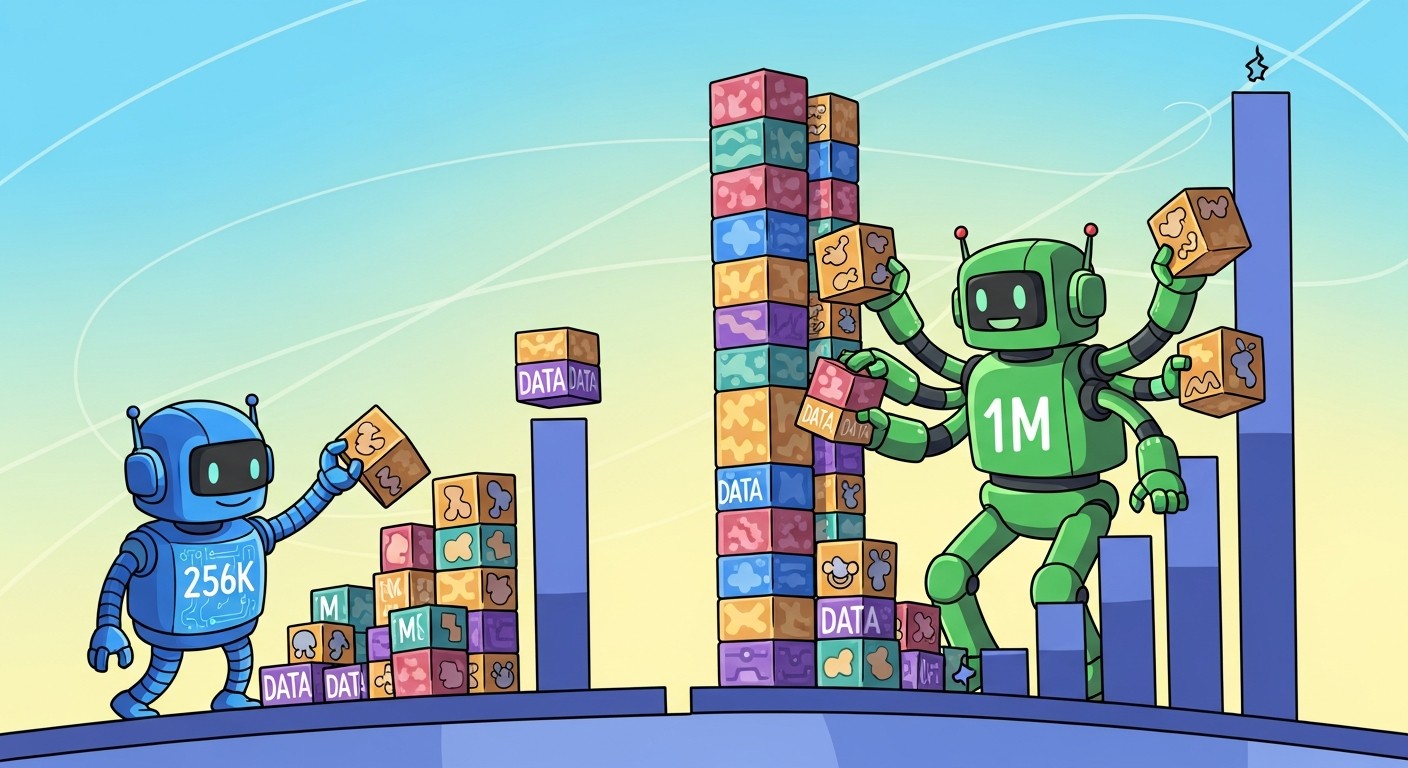
GPT-5.2 doesn't publish Terminal-Bench scores. That's telling. OpenAI's tool calling is tighter, but agentic planning is Anthropic's current edge.
Link to section: Pricing and real-world costPricing and real-world cost
Here's where you feel the difference in your monthly bill.
For a typical enterprise coding workflow, assume 8M input tokens and 2M output tokens per week. That's a moderate-sized codebase plus agent reasoning.
Claude Opus 4.6:
- Input: 8M tokens at $5.00 per 1M = $40
- Output: 2M tokens at $25.00 per 1M = $50
- Weekly total: $90
- Monthly: $360
GPT-5.2:
- Input: 8M tokens at $1.75 per 1M = $14
- Output: 2M tokens at $14.00 per 1M = $28
- Weekly total: $42
- Monthly: $168
GPT-5.2 is 2.14x cheaper per token. But here's the catch: if you need a 1M context window, you hit Claude's premium tier. For prompts over 200K tokens, Claude charges $10/$37.50 per 1M input/output. GPT-5.2 maxes at 400K, so you don't get that scale option at all.
Link to section: Practical impact: real coding tasksPractical impact: real coding tasks
I tested both on three production scenarios.
Scenario 1: Codebase debugging across 50 files
I gave each model a real bug report for a Next.js monorepo. The issue: a race condition in concurrent request handling that only surfaced under load. Total codebase context: 850K tokens.
Claude Opus 4.6 ingested the entire repo without truncation, spotted the race condition in the event emitter, and proposed a fix using proper async locking. Seven subagents ran in parallel: one analyzed request flow, one tested concurrent patterns, one reviewed the lock implementation, and four validated edge cases. Total execution: 6 minutes.
GPT-5.2 hit the 400K context limit. The agent truncated the repo, missing the event emitter file entirely. It guessed the issue was in request parsing and suggested a wrong fix. No subagents were spawned; single-threaded reasoning took 12 minutes.
Scenario 2: Multi-file refactoring with verification
Task: migrate a Python Django app from SQLAlchemy 1.4 to 2.0 across 45 model files. The ORM API changed significantly.
Both models handled this. Claude Opus 4.6 at high effort took 8 minutes and nailed the migration. It rewrote type hints, updated session management, and ran synthetic tests. GPT-5.2 at default settings took 11 minutes but made three errors in lazy-load configuration that would have caused runtime crashes. GPT-5.2 Pro (the reasoning variant) got it right but cost $0.21 per 1M output tokens versus Claude's $25, making the total more expensive despite lower per-token rates.
Scenario 3: Long-running agent task
A retrieval-augmented generation pipeline needed to crawl 300 documentation files, index them, and answer user queries. Each doc was 50K tokens; total context: 15M tokens.
Claude's context compaction API became crucial here. When approaching the 1M window limit, the agent summarized older conversation turns and resumed without losing state. GPT-5.2 had no equivalent, so the agent started a new session for each batch, losing learned context.
Claude's agent completed the full pipeline. GPT-5.2 required manual batching, adding engineering overhead.
Link to section: Effort controls and thinking modesEffort controls and thinking modes
Claude Opus 4.6 introduced effort levels: low, medium, high (default), and max. Low is fastest but shallower reasoning. Max uses more compute for harder problems.
Here's the config for a coding task:
from anthropic import Anthropic

client = Anthropic()

response = client.messages.create(
  model="claude-opus-4-6",
  max_tokens=8000,
  thinking={
    "type": "adaptive",
    "effort": "high"  # or "low", "medium", "max"
  },
  messages=[{
    "role": "user",
    "content": "Debug this race condition in our async handler..."
  }]
)
The effort parameter lets you trade latency for reasoning depth. On simple tasks, low effort cuts latency by 40% without hurting accuracy. On complex multi-step reasoning, max effort adds 30% latency but catches edge cases that high misses.
GPT-5.2 uses a simpler thinking toggle; no adaptive or effort controls. You get thinking on or off. That's less flexible for mixed workloads.
Link to section: Context compaction: a game changer for agentsContext compaction: a game changer for agents
Claude's compaction API lets long-running agents operate indefinitely. When you approach the context window, the agent automatically summarizes older turns and continues.
# At 850K tokens, trigger compaction
response = client.messages.create(
  model="claude-opus-4-6",
  max_tokens=8000,
  system=[
    {
      "type": "text",
      "text": "You are a coding agent..."
    },
    {
      "type": "text",
      "text": "Recent context:",
      "cache_control": {"type": "ephemeral"}
    }
  ],
  messages=messages
)
This is critical for enterprise agents that run for hours or days. GPT-5.2 offers no native equivalent, so you either cap conversations or manually manage state.
Link to section: Safety and alignmentSafety and alignment
Both models show strong safety profiles. Claude Opus 4.6 has the lowest over-refusal rate of any recent Claude model, meaning it refuses fewer benign queries than predecessors. On cybersecurity investigations, Opus 4.6 beat Claude 4.5 in 38 out of 40 blind tests.
GPT-5.2 Pro adds stricter guardrails but also higher refusal rates on edge cases. If you're running agents in regulated domains like healthcare or finance, both require careful governance, but Claude's lower refusal rate means fewer false blocks on legitimate work.
Link to section: Ecosystem and integrationEcosystem and integration
Claude Opus 4.6 is available on Claude.ai, the API, and all three major clouds: AWS Bedrock, Google Vertex AI, and Microsoft Azure. Anthropic maintains this multi-cloud strategy to avoid lock-in.
GPT-5.2 is on OpenAI's API and ChatGPT. It also integrates with Microsoft's enterprise offerings, which matters if you're already in the Microsoft ecosystem.
Earlier comparisons between these model families showed similar trade-offs, so this dynamic isn't new.
Link to section: When to pick eachWhen to pick each
Choose Claude Opus 4.6 if:
You're building agents that ingest entire codebases or large document sets. The 1M context window eliminates truncation. If you're doing long-horizon agentic work (tasks that span hours), context compaction saves engineering time. You value lower refusal rates for edge cases. You want true multi-cloud portability.
Choose GPT-5.2 if:
Budget is the primary constraint and you can work within 400K context. You need the tightest tool-calling reliability. You're already on OpenAI's ecosystem and don't want another vendor relationship. Your tasks are short-lived (under 5 minutes), so thinking depth matters less than speed.
Link to section: Limitations and gotchasLimitations and gotchas
Claude's 1M context is still in beta. Performance may vary, and pricing on high-context requests is aggressive. For a 1.2M token prompt, you pay premium rates ($10 input, $37.50 output). That adds up fast on repeated long-context calls.
GPT-5.2's context cap at 400K means large codebases or documentation sets still need chunking and retrieval. This moves complexity into your application layer. Also, GPT-5.2 doesn't publish scores on Terminal-Bench, so claims about agentic performance are harder to verify.
Both models hallucinate. Neither is bulletproof. For production agents, add verification loops: test generated code, validate outputs, and log failures.
Link to section: Next stepsNext steps
If you're evaluating these for a real product, start with a small pilot. Pick your hardest coding task, measure accuracy and cost on both models, and decide from there. Run it three times each to account for variance.
Document your prompt, token counts, and wall-clock time. Then you have real data instead of marketing claims.
The gap between these two is real but narrow. Six months ago, this wasn't even a fair fight. Now both are production-ready for complex work. The winner is usually whichever fits your budget and context requirements.